


Verified
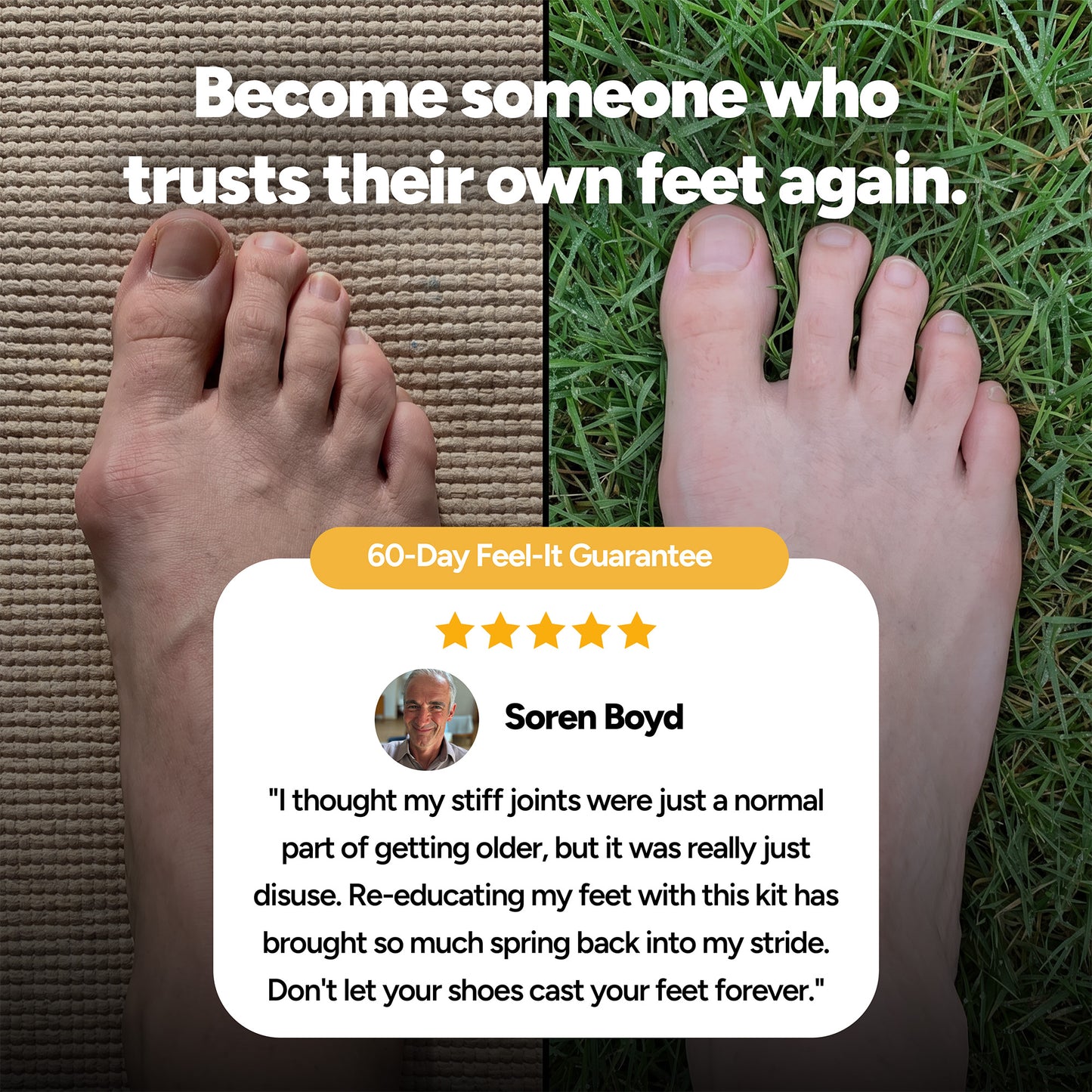
After 20 years of inserts and stiff shoes, this is the first thing that actually changed how my feet feel. The morning stiffness is basically gone.
 Karin M.
Your feet didn't age — they fell asleep. Decades in narrow, cushioned shoes let the muscles waste, and "support" only made it worse. Groundwork wakes them back up in four steps — Release, Splay, Strengthen, Balance — ten minutes a day.
Couldn't load pickup availability

“The first thing in 20 years that actually changed how my feet feel. The morning stiffness is basically gone.”
Massage ball, toe spacers, resistance band and balance pad — plus the guided day-by-day program and the Foot Health Playbook e-book, free with every kit.
Free, fast shipping — ships within 24 hours. Most orders arrive in 3–5 business days.
Train with the full kit for 60 days. If your feet don't feel stronger, email us for a no-questions-asked refund.
Just 10 minutes a day: release with the ball, splay with the spacers, strengthen with the band, balance on the pad. The guided program tells you exactly what to do.



 Foot Workout set
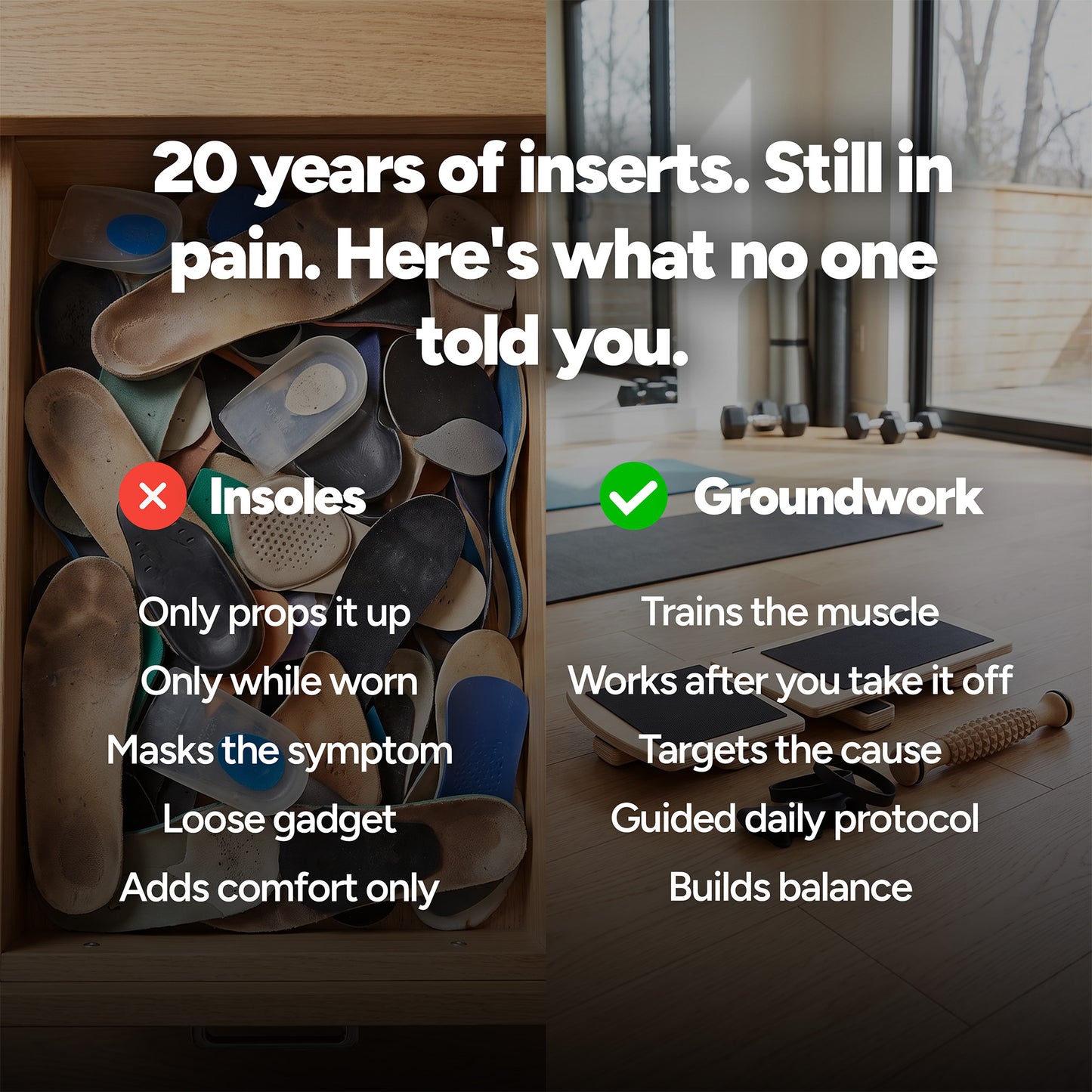
Narrow toe boxes, raised heels and thick cushioning act like casts on your feet — and just like a cast, they leave the muscles inside weak, stiff and switched off.
 Narrow toe box
Tapered shoes collapse your natural toe splay, killing the wide, stable base your foot is supposed to stand on.
 Raised heel
A lifted heel shortens the chain and tips load onto the forefoot — so every first step out of bed bites at the arch.
 Cushion & insoles
Soft, deadening soles mute the sensory feedback your brain uses to balance — so the muscles that keep you steady go quiet.
Your foot has 26 bones, 33 joints and over 100 muscles built to splay, grip and sense the ground. Free them, train them, and they wake back up — at any age.
You don't support an atrophied muscle — you rehab it. Four tools, four jobs your shoes have been doing for you, in the right order.
 1
1
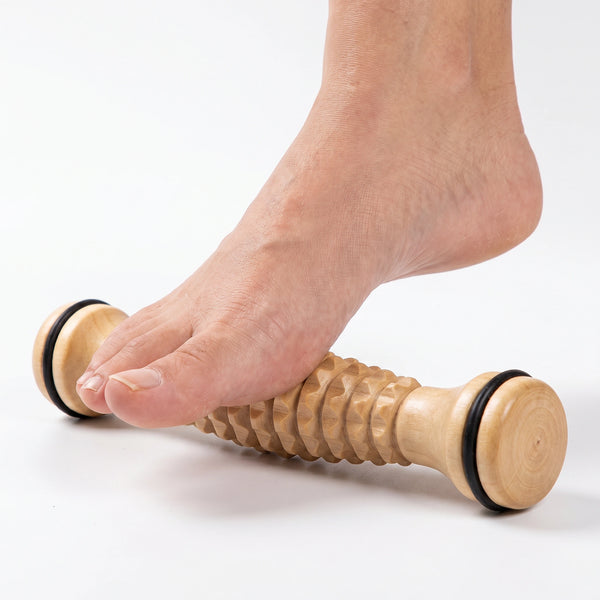
Wakes up the sole so you feel the ground again.
 2
2
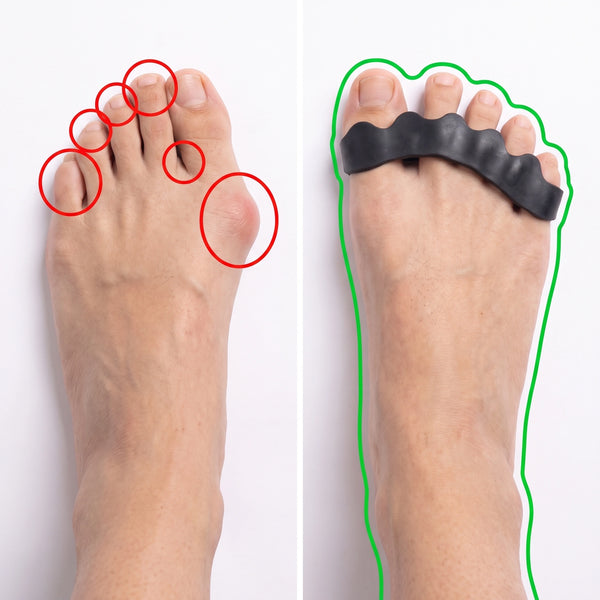
Restores the natural spread between your toes.
 3
3
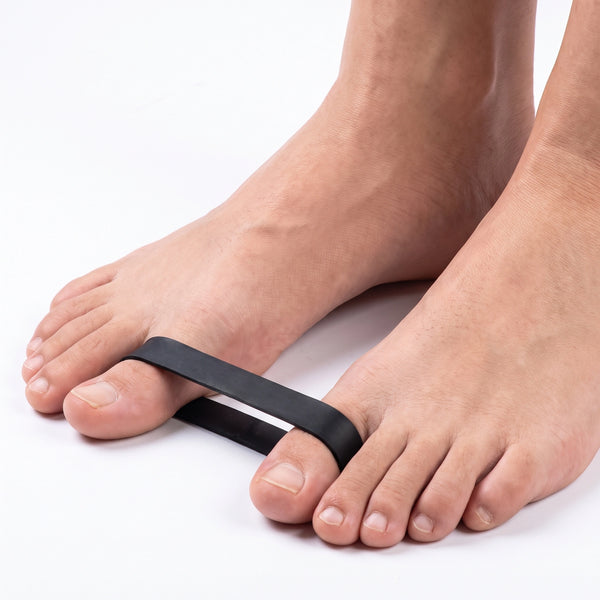
Rebuilds the small muscles no workout trains.
 4
4
Trains the stabilisers that keep you steady.
Follow the guided program on the couch, while you read, or before bed. No gym, no appointments.
Roll the massage ball under each foot to wake up your soles and free tight tissue.
Pop in the toe spacers and let your toes spread while you go about your evening.
Run through the guided band exercises to load the small muscles in your feet.
Finish on the balance pad to retrain your stabilisers and proprioception.
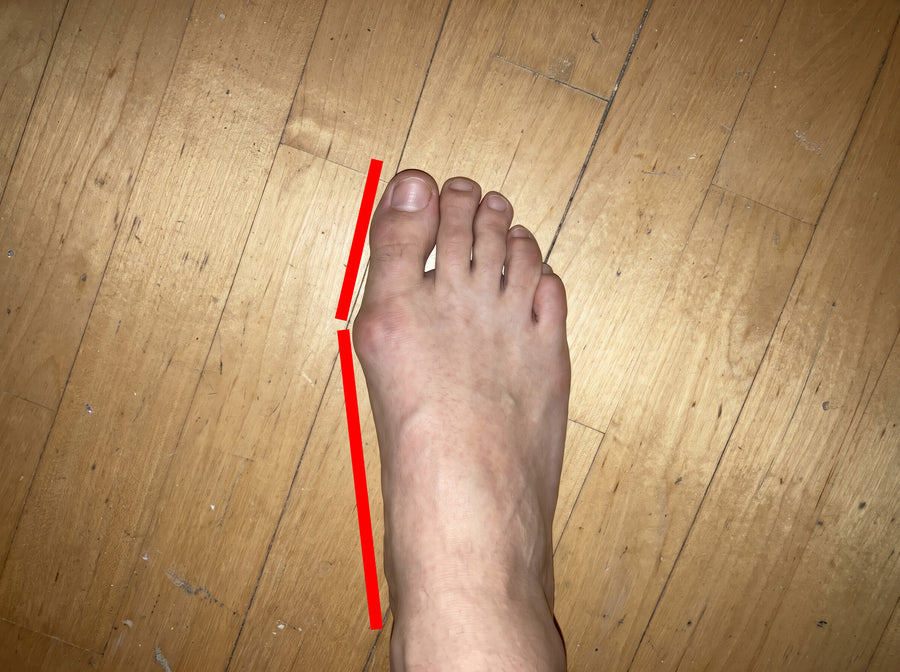
Strength comes back the way it does in any gym — gradually, then all at once. Drag the slider to see the difference.
 ↔
↔
Toes feel the stretch and your soles wake up. A few minutes can feel intense at first — then your feet relax and start to feel alive.
Less stiffness in the morning. The work starts to feel easy and your feet feel more connected to the ground.
Noticeably steadier on one leg, stronger through the arch, and more comfortable on long days on your feet.
Stronger, springier feet that hold up — the foundation everything above your ankles stands on, rebuilt.
Consistency beats intensity. Most people feel the first changes within days.
Surgery is invasive and expensive. Insoles are passive and never-ending. The Splay Lab rebuilds your feet at home — for a fraction of the cost.
Swipe to compare →
After 20 years of inserts and stiff shoes, this is the first thing that actually changed how my feet feel. The morning stiffness is basically gone.
Karin M.I couldn't balance on one leg for more than a second. Eight weeks in I can hold it comfortably — and I feel steadier on the stairs.
 David R.
My feet were the bottleneck in my running, not my legs. Stronger feet, fewer niggles, better push-off. Wish I'd trained them years ago.
 Priya S.
It hurts for a few minutes, then my feet relax and feel tingly and amazing. Without these I'm in pain — with them I'm pain-free.
 Tom B.
I bought it because I'm scared of falling as I get older. The program made it a habit instead of another gadget in a drawer.
 Susan L.
Strong feet support everything above them. My knees and hips feel better since I started — the foundation finally got some work.
 Marcus T.
The same principle behind any rehab: load a muscle progressively and it gets stronger. The research on feet is clear.
Figures refer to published, third-party research on foot strength, foot pain prevalence and balance — not to results from this product. The Splay Lab supports strength, mobility and balance; it is not a medical device and does not diagnose, treat or cure any condition. If you have a medical condition, check with your doctor before starting.
Nothing builds trust like a real face saying it out loud.
 Verified
Quote
 Verified
Without these I'm in pain. With them, I'm pain-free.
 Verified
Quote
 Verified
Quote
 Verified
My feet were the weak link in my running. Not anymore.
 Verified
Quote
 Verified
Quote
 Verified
I can finally balance on one leg again — it crept up on me how much I'd lost.
Developed alongside physical therapists, podiatry-minded coaches and natural-movement specialists — so the protocol is grounded in how feet actually get stronger.
After years on hard floors, my feet were chronically sore and stiff — and every "solution" I was sold just propped them up instead of fixing anything. When I learned that feet are muscles that atrophy like any other, everything changed. I stopped supporting them and started training them. The Splay Lab is the simple daily protocol I wish I'd had at the start.
We made this because the foot category is full of hype and confusion. Here's the honest version, answered on camera.
Because feet don't get stronger from one passive gadget. You need to release, splay, strengthen and balance — and you need a program that makes you actually do it. That's the whole point.
Most things you've tried were passive or piecemeal. This is a sequenced, active protocol with the tools and the daily plan together — so it doesn't end up in a drawer.
Most people feel their feet wake up on day one. Strength and balance are a few weeks of consistency away — it's training, and we're honest about that.
Spacers on their own are passive — like glasses that only work while you're wearing them. The Splay Lab is active training: you release, splay, strengthen and balance, so the changes come from your muscles getting stronger and stick around after you take everything off.
We agree that passive gadgets don't change bone structure — and we don't claim to. We help you build foot strength, mobility, balance and comfort. That's what training delivers, and it's what most people are really after.
Muscles respond to training at any age; the research on foot strengthening includes older adults. That said, we're not a medical device. If you have a diagnosed condition (arthritis, plantar fasciitis, diabetes, an injury), check with your doctor before starting and ease in gently.
It's about 10 minutes a day, and you can do most of it on the couch while you read or watch TV. The guided program tells you exactly what to do so there's no thinking involved.
It can feel intense for the first few minutes — then most people describe their feet relaxing and feeling great. Start gentle and progress slowly. Discomfort is normal; sharp pain is your cue to back off.
Many people feel something immediately — looser, more awake feet. Real strength and balance build over weeks, the same as any training. Think months, not days.
You can buy the parts piecemeal and guess at the routine — most people do, then it ends up in a drawer. The kit gives you the right tools and a sequenced program you'll actually follow.
Train with it for 60 days. If your feet don't feel stronger, more mobile and steadier, email us for a no-questions-asked refund. The risk is on us.
Use the full kit and follow the program. If you don't feel a real difference in strength, mobility and balance, email us for a no-questions-asked refund. Keep the program either way.